Image



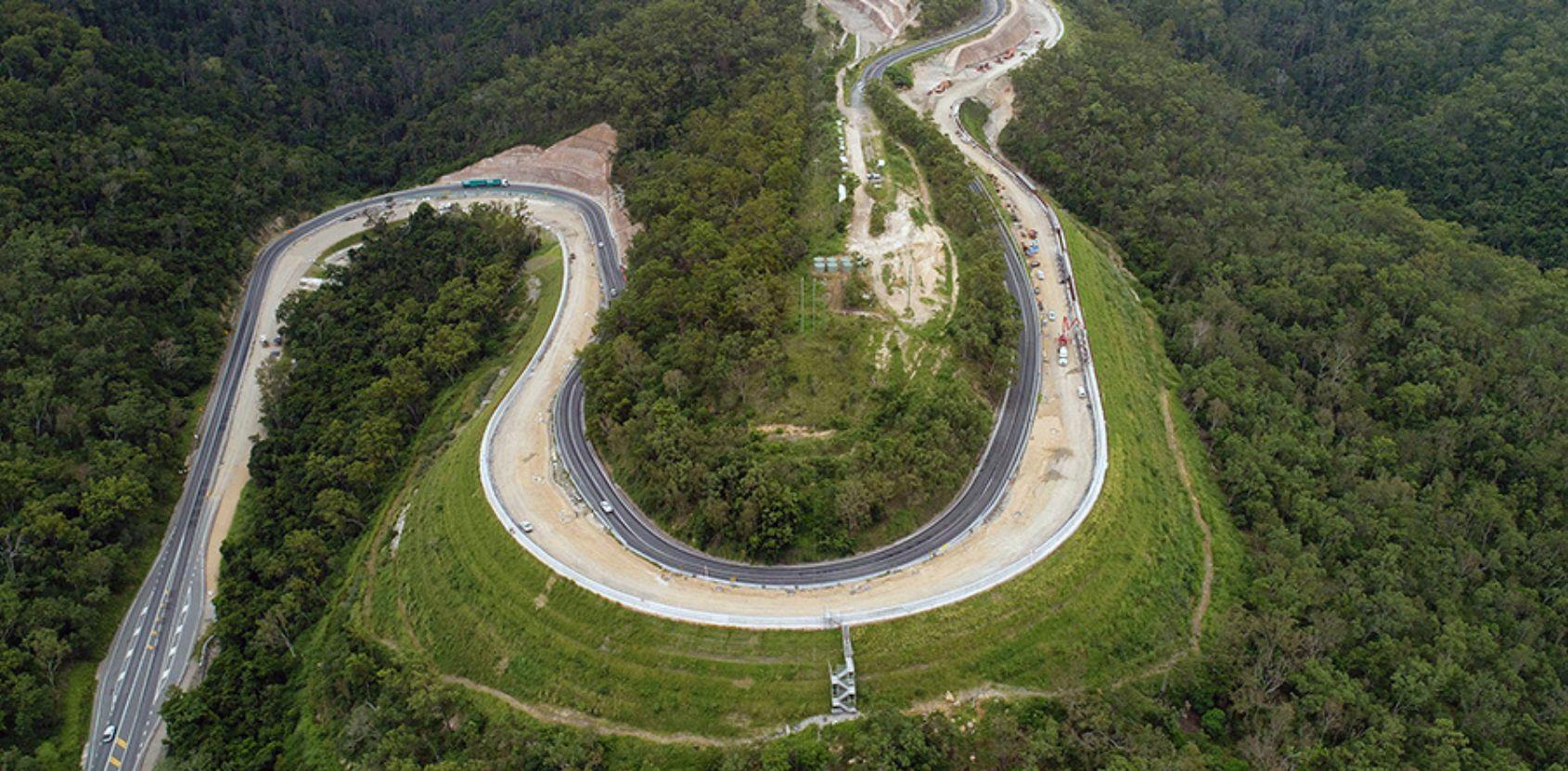
As Australasia’s infrastructure faces ageing assets, rising costs, and extreme weather, Geofabrics Australasia is helping projects stay strong and sustainable with advanced geosynthetics that improve stability, extend asset life and reduce environmental impact.
Geofabrics Australasia is a long-established supplier of geosynthetic solutions to major infrastructure and civil projects across Australia, New Zealand and in many parts of the world, working at the intersection of engineering performance, durability and innovation.
The company partners closely with engineers, contractors and asset owners to support complex works across roads, rail, ports, water, mining and large-scale land development, where long-term asset performance is critical.
At the helm is Chief Executive Officer and Managing Director, Dennis Grech, whose tenure has been marked by a focus on innovation, customer collaboration and transforming the business into a leader in sustainable solutions. Under his leadership, Geofabrics has continued to expand its range, coverage and capacity in geosynthetics, investing in advanced testing and locally-
driven development to respond to the evolving demands of the infrastructure sector.
Grech says that the infrastructure sector in Australia is rapidly shifting toward solutions that deliver durability, sustainability and long term performance.
“We’re seeing stronger demand for designs that handle climate variability, significant weather events, deliver lower lifecycle costs and integrate more seamlessly with the environment,” he says. “Ageing assets and rising costs have seen traditional approaches being re-evaluated in favour of engineered systems that provide both technical strength and environmental benefits.”
Grech explains that geosynthetics are now fundamental to modern infrastructure.
“They help extend pavement life, manage drainage and improve stability,” he says. “All while reducing material and heavy machinery use and, in turn, carbon impact.
“Engineers and contractors are increasingly specifying them not as add-ons, but as core design elements. That shift reflects a deeper understanding of how smart materials deliver real outcomes on-site and across an asset’s service life.”
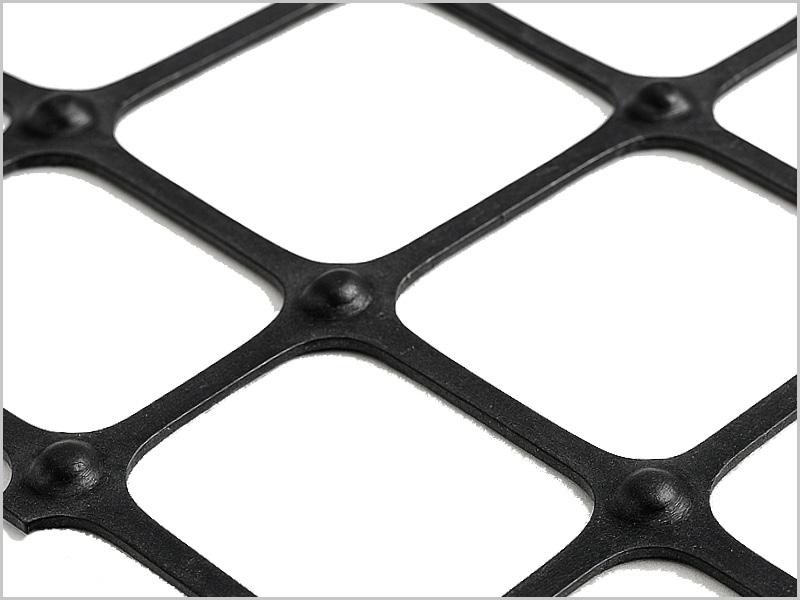
Grech says that engineered geosynthetics, such as geogrids and modular wire mesh systems, are now essential in delivering performance outcomes that traditional options struggle to match.
“These materials allow us to reinforce soil, improve stability and manage drainage more effectively across projects – from roads and rail to bridge abutments and urban development – which is key in today’s complex design environment.
“I see Geofabrics as an enabler to our customers to lower their carbon footprint on their projects. That is the essence of our business and of our solutions.”
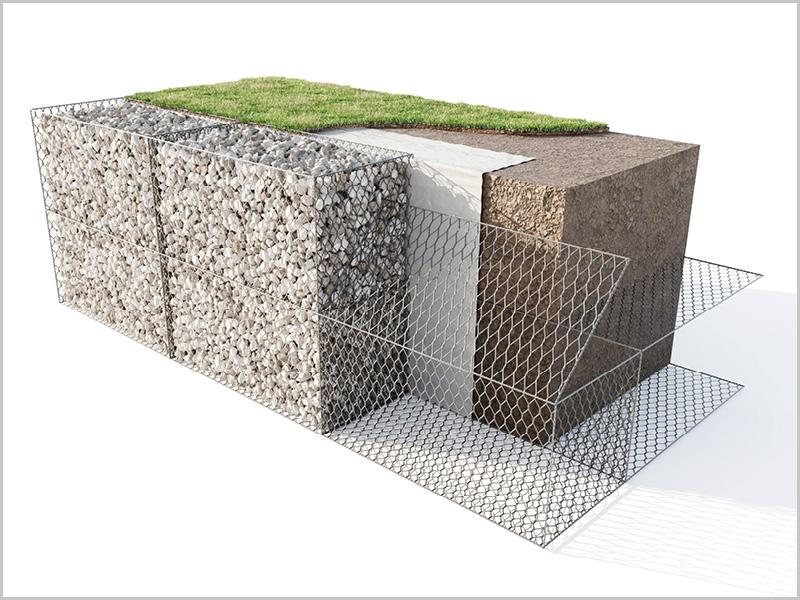
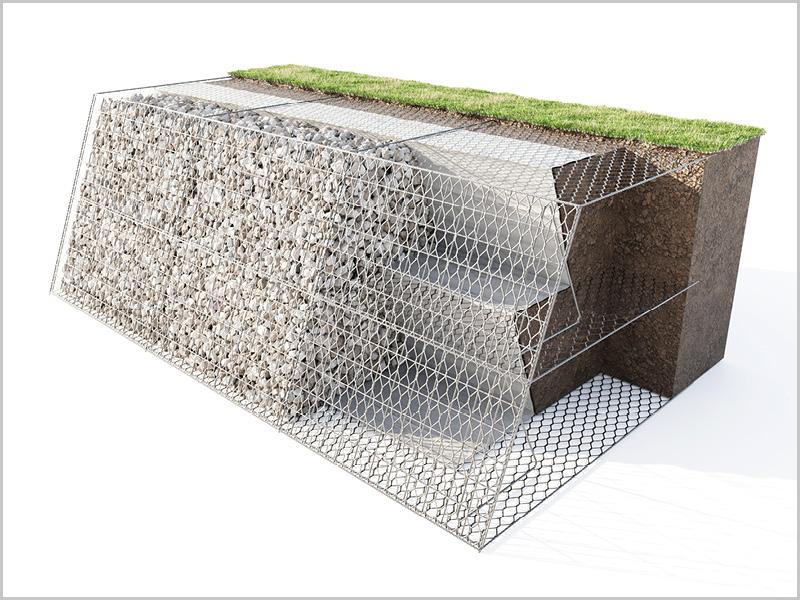
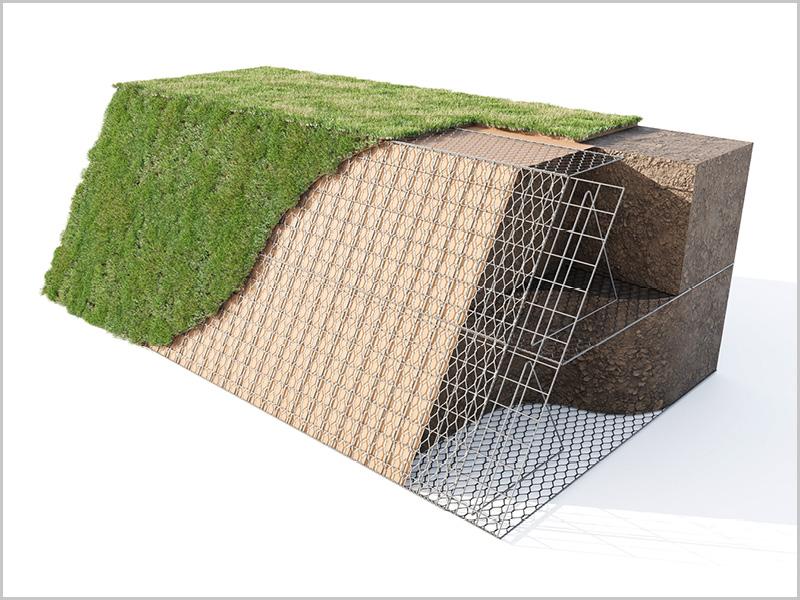
Geofabrics' Geomesh range is a family of modular wire mesh systems used in Mechanically Stabilised Earth (MSE) walls and Reinforced Soil Slope (RSS) systems.
“These products are engineered solutions that combine reinforcing mesh and structural backfill to create versatile soil retention structures used in steep embankments, retaining walls and slope stabilisation,” Grech says.
“There are different configurations tailored to project needs – Geomesh Gabion, Geomesh Rock and Geomesh Natural. Each provides different optimum slope angles and varying surface finishes.
“These systems are designed for long-term durability (often targeted for 120-year working life), corrosion resistance and flexibility in design and finish.”
Grech says that Geofabrics has seen strong uptake of the product, especially on projects that require robust stability with reduced construction time and cost.
“Engineers appreciate the combination of engineered soil reinforcement and flexible facing options, while contractors benefit from modular components that speed up installation and simplify site logistics,” he says.
“Significant weather events across Australasia are having a serious impact on infrastructure, especially through flooding and landslides. It’s imperative that MSE and RSS systems can cope with the drainage loads of these events as well as the outward pressure of day-to-day loads.
“This is where our team at the GRID come into their own.”
GRID – Geofabrics Research, Innovation & Development Centre – is a dedicated innovation and testing hub, where the company researches and evaluates products, as well as simulate challenging field conditions and custom designs solutions for specific projects.
“The team also refine solutions before they come to market. It’s about moving beyond generic specifications to engineered certainty – proving performance in local conditions through controlled, repeatable and rigorous testing rather than just theory,” Grech says.
“Many suppliers rely on overseas legacy data or basic third-party testing. At the GRID, we can replicate real infrastructure conditions, accelerate product development and validate performance before products are deployed.
“This gives our technical teams and customers confidence that our solutions will deliver as expected – even under demanding service loads or unique conditions in Australia, New Zealand and Oceania.”
The GRID team comprises engineers and experts in construction with years of real-world experience in infrastructure.
“They are ahead of the curve in sourcing products and innovations. The GRID has a proven track record of bringing innovations to the geosynthetic market,” Grech says.
He says the GRID leads to fewer design uncertainties, lower risk on site and ultimately better lifecycle performance.
“For clients, this means greater assurance that infrastructure will remain stable, require less maintenance and perform sustainably for decades.
“The GRID also helps us innovate faster, adapting to new challenges and delivering solutions that meet evolving regulatory and environmental priorities.”
Grech says that across the region, the increased pressures caused by climate change and industry demand is driving innovation.
“More products will need to be designed for local conditions with better economic outcomes and reduced labour and installation, and this will need to be backed by data,” he says.
“Collaborations between government and the private sector will increase. We’re looking forward to being the partner that teams rely on to solve their toughest engineering challenges.”